News

Why Partial Discharge Control Is Critical in Box-type Transformer Substation?

2026-09-24 0 Leave me a message

In a compact box-type transformer substation installed in a residential area, a faint crackling sound can sometimes be heard near the high-voltage compartment. Most passersby would not notice it. But to a trained maintenance engineer, that sound is a warning: partial discharge. Partial discharge is a localized electrical discharge that does not completely bridge the insulation between conductors. It is a symptom of insulation degradation, and if left unchecked, it will gradually erode the insulation until a complete breakdown occurs. In a box-type transformer substation, where the equipment is enclosed in a compact, sealed enclosure, partial discharge is particularly dangerous. The confined space makes it difficult to inspect, and the consequences of a failure are severe: fire, explosion, and power outage for entire neighborhoods.


This article will explain why partial discharge control is critical in box-type transformer substations. We will examine the causes of partial discharge, the conditions that make box-type substations particularly vulnerable, the methods used to detect and monitor partial discharge, and the design and manufacturing practices that prevent it. We will also provide detailed specifications for our Box-type Transformer Substation products from our factory at Lugao Power Co.,Ltd., highlighting the features that ensure reliable insulation performance. Whether you are a utility engineer, a facility manager, or a procurement specialist, this article will provide the technical knowledge you need to understand and address the challenge of partial discharge in compact substation environments.

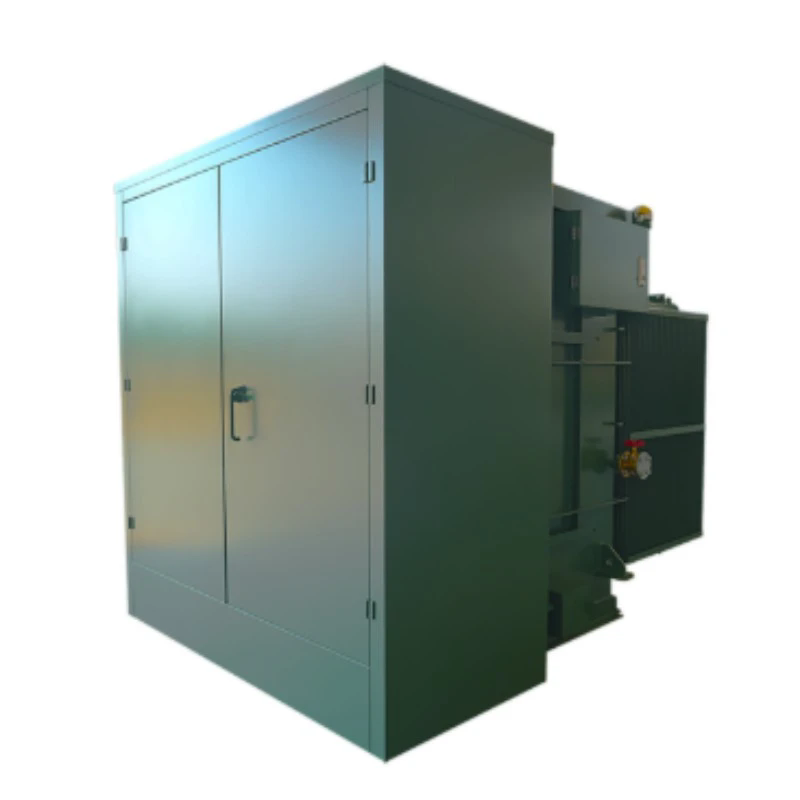
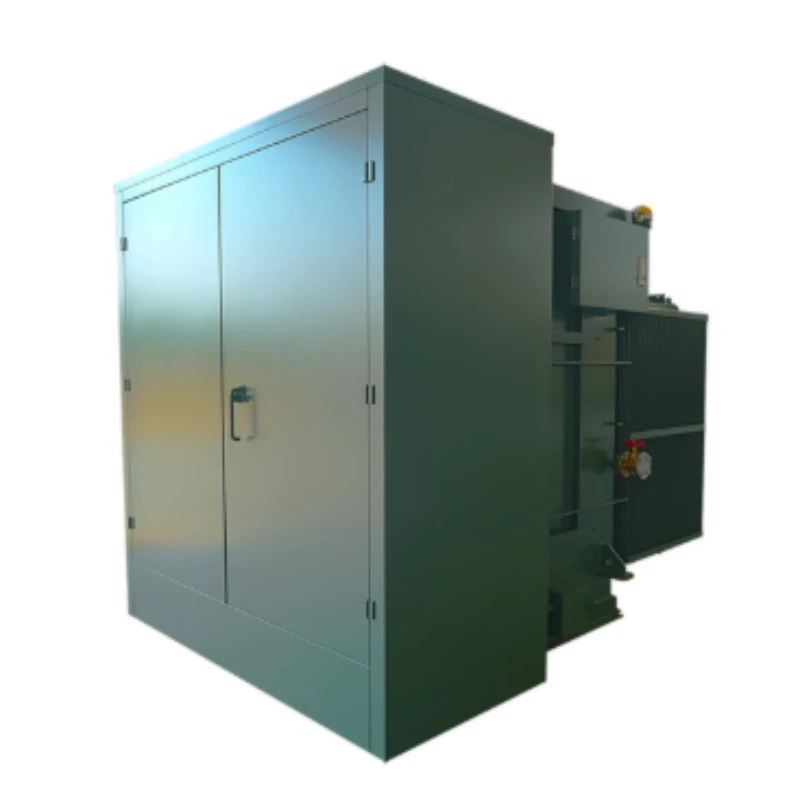
Transformer oil insulation Box-Type Compact American type Substation


Table of Contents


1. What Is Partial Discharge and Why Does It Occur?

Partial discharge is a localized electrical discharge that occurs within an insulation system but does not completely bridge the gap between two conductors. It is a partial breakdown of the insulation, occurring at a point of weakness. The discharge is typically a small spark or a series of sparks that occur in a void, a crack, or along a surface within the insulation. Partial discharge can occur in solid insulation, in liquid insulation, or in gas insulation. It is a symptom of a defect or a stress concentration in the insulation system. The discharge itself does not immediately cause a failure, but it generates heat, chemical by-products, and mechanical erosion that gradually degrade the insulation. Over time, the insulation weakens to the point where a complete breakdown occurs.

The causes of partial discharge can be grouped into three categories: defects in the insulation material, defects in the manufacturing process, and defects that develop during operation. Defects in the insulation material include voids, contaminants, and inconsistencies in the dielectric properties. Defects in the manufacturing process include poor impregnation, incomplete curing, and damage during assembly. Defects that develop during operation include thermal aging, mechanical stress, and moisture ingress. In a box-type transformer substation, all three categories of defects can occur. The compact design, the sealed enclosure, and the high electrical stress in a small space create conditions that are favorable to partial discharge. The table below summarizes the common causes of partial discharge and the conditions that promote it.

Cause Category Specific Causes Conditions That Promote It
Material Defects Voids, contaminants, inconsistent dielectric Poor quality control in material production
Manufacturing Defects Poor impregnation, incomplete curing, assembly damage Inadequate process control
Operational Defects Thermal aging, mechanical stress, moisture ingress Overloading, environmental exposure, poor maintenance

At Lugao Power Co.,Ltd., we understand the causes of partial discharge and design our Box-type Transformer Substation products to minimize the risk. We use high-quality insulation materials, follow rigorous manufacturing processes, and test every unit for partial discharge before it leaves our factory.


2. Why Are Box-type Transformer Substations Particularly Vulnerable?

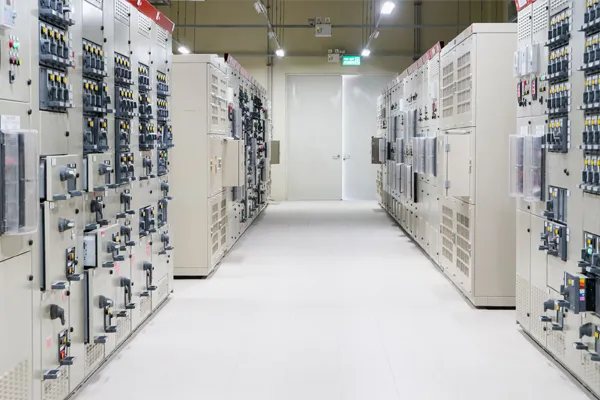
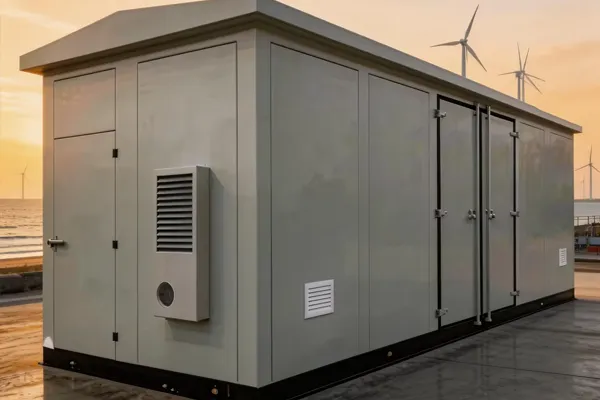
Box-type transformer substations are compact, prefabricated units that house a transformer, high-voltage switchgear, low-voltage distribution equipment, and control systems in a single enclosure. They are widely used in residential areas, commercial developments, and industrial parks because they are compact, easy to install, and aesthetically unobtrusive. However, their compact design and sealed construction create specific challenges for partial discharge control. The first challenge is the high electrical stress. In a compact substation, the distances between conductors and grounded parts are reduced, which increases the electric field strength. Higher electric field strength increases the likelihood of partial discharge, especially at points of geometric discontinuity, such as sharp edges, corners, and protrusions. The second challenge is the confined environment. The sealed enclosure traps heat and moisture, which can accelerate insulation aging and promote partial discharge. The third challenge is the difficulty of inspection and maintenance. Because the equipment is enclosed, it is difficult to visually inspect the insulation for signs of degradation. This means that partial discharge can go undetected for long periods, leading to unexpected failures.

The table below summarizes the specific vulnerabilities of box-type transformer substations compared to conventional open-air substations.

Factor Box-type Substation Conventional Substation
Electrical Stress High (compact design) Lower (larger clearances)
Thermal Management Challenging (sealed enclosure) Good (natural ventilation)
Moisture Control Critical (condensation risk) Less critical (open air)
Inspection Access Difficult (enclosed) Easy (open)
Partial Discharge Risk Higher Lower

At our factory, we address these vulnerabilities through careful design. We use optimized electric field distribution, effective thermal management, and robust moisture control to minimize the risk of partial discharge. We also integrate partial discharge monitoring systems into our substations to provide early warning of insulation degradation.


3. What Are the Consequences of Uncontrolled Partial Discharge?

The consequences of uncontrolled partial discharge in a box-type transformer substation can be severe. Partial discharge is a progressive phenomenon. It starts as a small, localized discharge and gradually erodes the insulation. The erosion creates a conductive path that eventually leads to a complete breakdown, known as a flashover. A flashover in a transformer substation can cause an explosion, a fire, and a total loss of the equipment. The consequences extend beyond the substation itself. A failure can cause a power outage for the entire area served by the substation, affecting homes, businesses, and critical infrastructure. The cost of repair or replacement can be substantial, and the cost of lost revenue and productivity can be even higher. The table below summarizes the progression of partial discharge and the consequences at each stage.

Stage Description Consequence
Initiation Small discharge in a void or at a surface No immediate impact; undetectable without instruments
Development Discharge erodes insulation; creates conductive path Gradual degradation of insulation; detectable with instruments
Advanced Insulation weakened; discharge increases Risk of flashover; audible noise and ozone generation
Failure Complete breakdown of insulation Explosion, fire, power outage, equipment destruction

At Lugao Power Co.,Ltd., we take the threat of partial discharge seriously. Our Box-type Transformer Substation products are designed and tested to minimize the risk of partial discharge and to provide reliable performance over their entire service life. We also offer partial discharge monitoring systems that provide early warning of insulation degradation, allowing maintenance to be scheduled before a failure occurs.


4. How Is Partial Discharge Detected and Monitored?

Partial discharge can be detected using a variety of methods, each with its own advantages and limitations. The most common methods are electrical detection, acoustic detection, and chemical detection. Electrical detection measures the high-frequency current pulses that are generated by partial discharge. This method is highly sensitive and can detect very small discharges. It is typically used for online monitoring, where sensors are permanently installed on the equipment. Acoustic detection uses ultrasonic sensors to detect the sound waves generated by partial discharge. This method is useful for locating the source of the discharge. Chemical detection analyzes the by-products of partial discharge, such as ozone or nitrogen oxides, in the gas surrounding the equipment. This method is less sensitive but can provide a simple indication of discharge activity. The table below compares the different detection methods.

Detection Method Principle Sensitivity Application
Electrical (HFCT) Detects high-frequency current pulses High Online monitoring; permanent installation
Electrical (Transient Earth Voltage) Detects voltage pulses on grounded parts Medium Portable inspection; periodic surveys
Acoustic (Ultrasonic) Detects sound waves generated by discharge Medium Locating the source of discharge
Chemical (Ozone, NOx) Detects gaseous by-products Low Simple indication; not for precise measurement
Optical (UV) Detects ultraviolet light emitted by discharge Medium Visual inspection; locating discharge

At our factory, we use electrical detection methods to test our Box-type Transformer Substation products during manufacturing. We also offer optional online monitoring systems that can be integrated into the substation to provide continuous partial discharge monitoring. These systems use HFCT sensors to detect discharge activity and provide an alarm if the level exceeds a preset threshold. This allows the operator to take corrective action before a failure occurs.


5. What Design and Manufacturing Practices Prevent Partial Discharge?

Preventing partial discharge in a Box-type Transformer Substation requires a combination of careful design, high-quality materials, and rigorous manufacturing processes. The design must ensure that the electric field is evenly distributed and that there are no points of high stress. This is achieved by using rounded conductors, avoiding sharp edges, and maintaining adequate clearances. The insulation materials must be free from voids and contaminants. The manufacturing process must ensure that the insulation is properly impregnated and cured. The table below summarizes the key design and manufacturing practices that prevent partial discharge.

Practice Description Impact on Partial Discharge
Electric Field Optimization Rounded conductors, optimized clearances Reduces stress concentrations
High-Quality Insulation Void-free, low-loss materials Reduces the likelihood of discharge initiation
Vacuum Casting Resin casting under vacuum to eliminate voids Eliminates a common site of partial discharge
Moisture Control Sealed enclosure, desiccant, heaters Prevents moisture-induced discharge
Partial Discharge Testing Routine testing during manufacturing Detects and eliminates defects before shipment

At our factory, we implement all these practices in the production of our Box-type Transformer Substation products. We use vacuum casting for our epoxy components to eliminate voids and ensure a homogeneous insulation structure. We control the humidity in our production area to prevent moisture from being trapped in the insulation. And we test every substation for partial discharge before it leaves our factory. Our testing is conducted in accordance with IEC 62271-200 and other relevant standards, and we provide test reports with every unit.


6. What Are the Key Specifications for Our Box-type Transformer Substation?

The following table provides the key specifications for our Box-type Transformer Substation products. These specifications are designed to ensure reliable performance and minimal partial discharge risk in the most demanding applications.

Parameter Specification Notes
Rated Voltage 12 kV, 24 kV, 36 kV Other voltages available on request
Rated Frequency 50 Hz, 60 Hz —
Rated Current 630 A, 1250 A, 2000 A —
Rated Short-Time Withstand Current 20 kA, 25 kA, 31.5 kA 3 seconds
Partial Discharge Level < 5 pC at 1.1 × rated voltage Measured in accordance with IEC 62271-200
Insulation Material Epoxy resin, vacuum cast Void-free, high dielectric strength
Enclosure Protection IP54, IP65 IP65 for outdoor applications
Operating Temperature -25°C to +55°C —
Monitoring Options Partial discharge sensor, temperature sensor, humidity sensor Integrated into control system
Standards IEC 62271-200, IEC 62271-100, GB/T 3906 —

At Lugao Power Co.,Ltd., we manufacture Box-type Transformer Substation products to meet these specifications and more. We can customize the substation to suit specific project requirements, including special voltages, special protection levels, and special monitoring systems. Our factory has the expertise and the equipment to produce high-quality substations for the most demanding applications.


7. Frequently Asked Questions (FAQ)

Question 1: What is the acceptable partial discharge level for a box-type transformer substation?

Answer: The acceptable partial discharge level depends on the voltage class and the applicable standards. For a 12 kV box-type substation, the typical requirement is less than 5 pC at 1.1 times the rated voltage. For higher voltages, the requirement may be less than 10 pC. At Lugao Power Co.,Ltd., our substations are tested to meet or exceed these requirements, and we provide test reports with every unit.

Question 2: How often should partial discharge testing be performed?

Answer: Partial discharge testing should be performed during manufacturing, during commissioning, and periodically during operation. For online monitoring, continuous monitoring is recommended for critical substations. For periodic testing, we recommend an annual test for most applications. The frequency may be increased for older substations or those with a history of partial discharge issues.

Question 3: What causes partial discharge in a box-type transformer substation?

Answer: Partial discharge is caused by defects in the insulation system, such as voids, contaminants, or damage. These defects can be introduced during manufacturing or can develop during operation due to thermal aging, mechanical stress, or moisture ingress. The compact design and sealed enclosure of a box-type substation can increase the risk of partial discharge by increasing the electrical stress and trapping moisture.

Question 4: Can partial discharge be repaired, or does the substation need to be replaced?

Answer: In some cases, partial discharge can be repaired by replacing the affected insulation component. However, if the discharge has caused significant degradation, the entire substation may need to be replaced. The best approach is to detect partial discharge early, before significant damage occurs, and to take corrective action. At our factory, we offer repair and replacement services for our Box-type Transformer Substation products.

Question 5: What is the difference between partial discharge and corona discharge?

Answer: Partial discharge and corona discharge are related phenomena. Corona discharge is a type of partial discharge that occurs at the surface of a conductor in a gas or liquid. It is characterized by a visible glow and a hissing sound. Partial discharge is a broader term that includes corona discharge as well as discharge that occurs within voids or along surfaces in solid insulation. In the context of a box-type transformer substation, partial discharge is the more relevant term because it includes discharge in the solid insulation, which is the primary concern.


8. Conclusion

Partial discharge control is critical in box-type transformer substations because the compact design and sealed enclosure create conditions that are favorable to insulation degradation. Uncontrolled partial discharge can lead to a complete breakdown, causing fire, explosion, and power outages. Preventing partial discharge requires a combination of careful design, high-quality materials, and rigorous manufacturing processes. It also requires effective detection and monitoring to identify early signs of degradation and to take corrective action before a failure occurs. At Lugao Power Co.,Ltd., our factory is committed to manufacturing Box-type Transformer Substation products that meet the highest standards of insulation reliability. We use vacuum-cast epoxy insulation, optimized electric field design, and rigorous partial discharge testing to ensure that our substations provide reliable performance over their entire service life.

Whether you are designing a new substation, upgrading an existing one, or looking for a reliable partner for your next project, we invite you to contact our technical team to discuss your requirements. We can provide detailed product specifications, partial discharge test reports, and application support. Our commitment to quality and customer satisfaction has made us a trusted partner for power distribution projects around the world.

Contact Lugao Power Co.,Ltd. today to discuss your Box-type Transformer Substation requirements and discover how our products can ensure reliable, partial-discharge-free operation for your power distribution system.

Related News
Leave me a message
X
We use cookies to offer you a better browsing experience, analyze site traffic and personalize content. By using this site, you agree to our use of cookies. Privacy Policy
RejectAccept